From Argan Tree to Golden Oil: The Complete Production Process

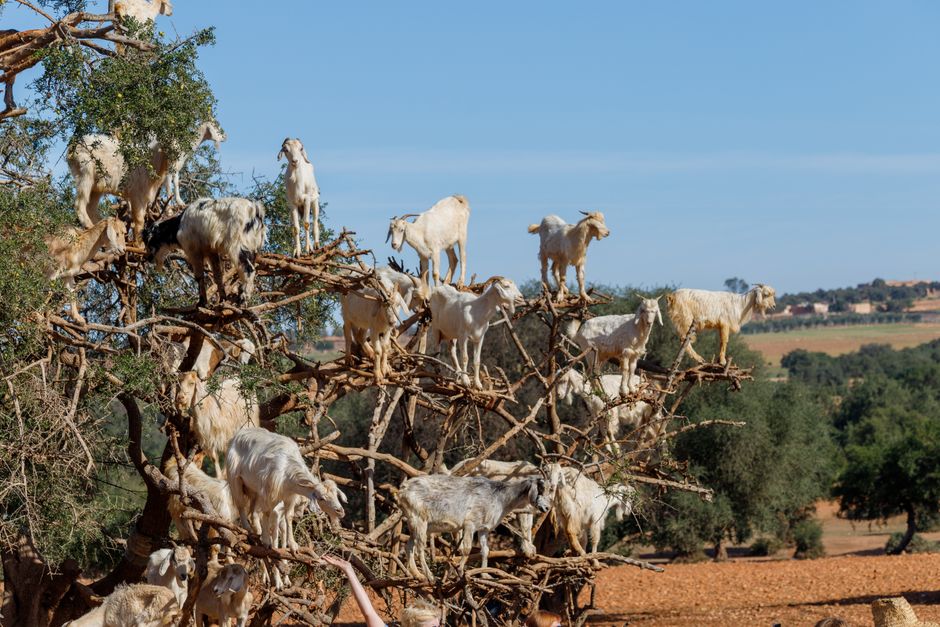
Argan trees (Argania spinosa) grow only in southwest Morocco and can live for over 200 years.
Every drop of argan oil passes through a meticulous journey — from the argan forests of southwest Morocco to a cold-press that preserves its full nutritional profile. Here is how the process works, step by step.
The Argan Forest: A UNESCO-Protected Ecosystem
The argan tree, Argania spinosa, is endemic to a narrow strip of land in southwest Morocco, primarily in the Souss Valley and the Anti-Atlas foothills. This region, covering roughly 2.5 million hectares, is so ecologically unique that UNESCO designated it a Biosphere Reserve in 1998. The trees survive in semi-arid conditions where few other species can, their deep root systems drawing moisture from far below the surface and anchoring the soil against desertification.
Argan trees flower in spring and produce small green fruits that ripen over the summer. By late summer and early autumn, the fruits turn from green to a golden yellow, signalling that they are ready for collection. The harvest typically runs from July through September, depending on rainfall and altitude. Because the trees grow on rough terrain, mechanical harvesting is not feasible — every fruit is gathered by hand.
Fruit Collection and Sun-Drying
After collection, the fruits are spread out under the Moroccan sun to dry for several days. Sun-drying reduces the moisture content of the outer pulp, making it easier to separate from the hard inner nut. The dried pulp is sometimes used as animal feed, ensuring that nothing from the harvest goes to waste. The critical material is the nut itself — inside each one lies two or three oil-rich kernels that are the source of argan oil.
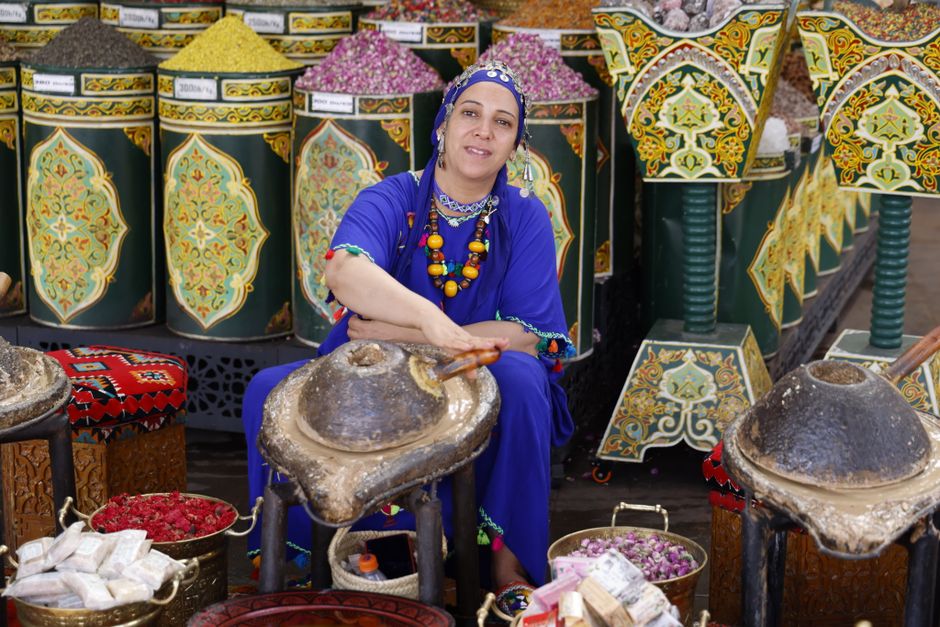
Cracking the nuts to extract the kernels is the most labour-intensive step in the entire process. Traditionally, women place the nut between two stones and strike it with precision — too hard and the kernel shatters, too soft and the nut remains sealed. A skilled worker can crack approximately 2 to 3 kilograms of nuts per day, yielding about 1 kilogram of kernels, which in turn produces roughly 200 to 250 millilitres of oil. This is why genuine argan oil carries a premium price: it takes roughly 100 kilograms of fruit to produce a single litre.

Cold-Pressing: Preserving the Oil's Integrity
Once the kernels are separated, they are gently cold-pressed using mechanical screw presses at temperatures that never exceed 40 degrees Celsius. This low-temperature pressing is essential because heat degrades the oil's vitamin E content, unsaturated fatty acids, and bioactive compounds. The first press yields the highest grade of culinary and cosmetic argan oil — a golden-amber liquid with a nutty aroma and a complex fatty acid profile dominated by oleic acid (approximately 45%) and linoleic acid (approximately 35%).
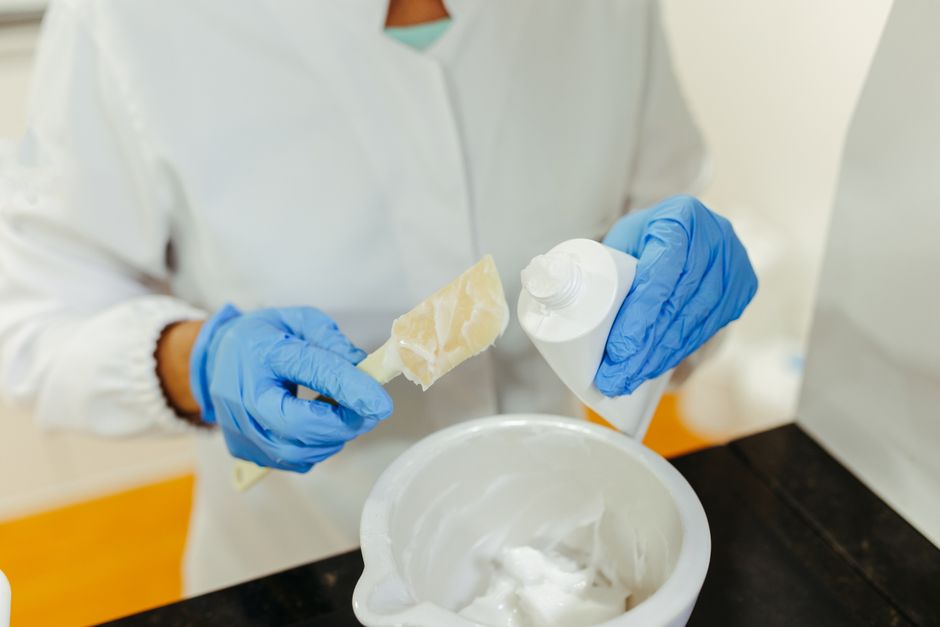
After pressing, the oil is filtered to remove any solid particles and then left to decant naturally for several weeks. During decanting, fine sediment settles to the bottom, and the clear oil above is drawn off. The final product is lab-tested for peroxide value, acidity, and oxidation markers to confirm it meets international quality standards before it is approved for bottling and export.
Quality Control and International Standards
BioArgan's production process follows a strict quality management system aligned with ISO 22716 (cosmetic GMP) and ECOCERT organic certification. Every batch is tracked from the harvest location through to the finished product, with samples retained for traceability. Peroxide values are kept below 10 meq/kg, and free fatty acid content is maintained below 0.5%, well within the thresholds set by the Moroccan argan oil norm (NM 08.5.090).
For private label and contract manufacturing clients, we provide full documentation including certificate of analysis, material safety data sheets, and organic certification documents. This transparency ensures that every brand sourcing argan oil from BioArgan can stand behind the quality of their products with confidence.