A Thousand Years of Beauty: The History of Moroccan Natural Cosmetics
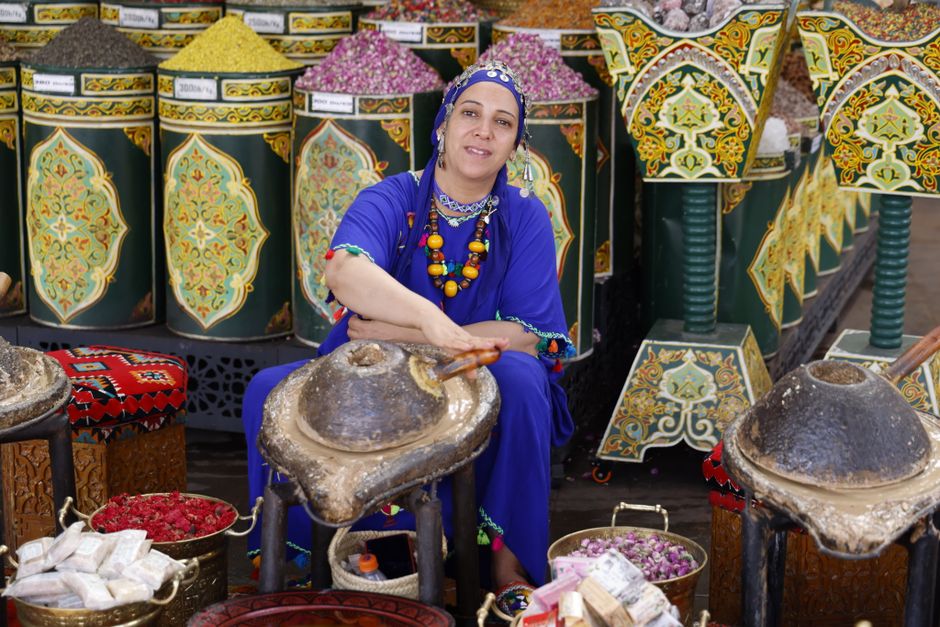
Morocco's souks have been centres of cosmetic trade for centuries, where natural ingredients were bought and sold.
Morocco's beauty traditions stretch back over a millennium, blending Berber, Arab, Andalusian, and sub-Saharan influences. From the hammam to the kohl pot, these practices have shaped what the world now recognises as natural Moroccan cosmetics.
Berber Roots: Beauty Before Borders
Long before Morocco existed as a nation state, the indigenous Amazigh (Berber) peoples of North Africa had developed a sophisticated understanding of botanical beauty care. Archaeological evidence from the Atlas Mountains region suggests that plant-based oils, mineral powders, and clay preparations were in use for skin protection and adornment as early as the 1st millennium BCE. The harsh desert and mountain environment drove innovation: argan oil protected skin from sun and wind, ghassoul clay drew out impurities, and rose water soothed irritation.
These early beauty practices were not merely cosmetic — they were medicinal. Berber women understood that the same plants that healed burns and wounds could also maintain healthy skin. This fusion of cosmetic and therapeutic purpose remains a defining feature of Moroccan natural cosmetics today.
The Hammam: A Public Temple of Beauty
The hammam, or public bathhouse, arrived in Morocco with the spread of Islam in the 8th century, though the concept had earlier roots in Roman and Byzantine bathhouses. Over the centuries, the Moroccan hammam evolved into something uniquely its own — a communal space where beauty rituals were performed with extraordinary care. The central treatment was beldi black soap, a paste made from olive oil and potash that softens the skin and prepares it for exfoliation with a kessa glove.
After exfoliation, women applied ghassoul clay mixed with rose water as a full-body mask, followed by argan oil to seal in moisture. Nila, a deep blue indigo-based powder, was used to lighten and brighten skin tone. These rituals, performed weekly, were as much about social bonding as they were about beauty — the hammam was where news was exchanged, advice was given, and community ties were reinforced.

Andalusian Influence and the Golden Age
In the 11th and 12th centuries, Morocco's Almoravid and Almohad dynasties presided over a cultural golden age. Scholars, physicians, and artisans from Al-Andalus (medieval Muslim Spain) brought advanced knowledge of pharmacology and perfumery to cities like Fez and Marrakech. Distillation techniques, refined by Arab chemists from earlier Persian and Greek traditions, were applied to Moroccan roses, producing the rose water that remains a staple of Moroccan cosmetics today.
The city of Fez became a particular centre of perfumery and cosmetic production. The famous tanneries of Fez, still operating today, produced not only leather but also the vegetable-based dyes and treatments that found their way into cosmetic formulations. Mekhmaria, a perfumed cream combining flower essences with argan oil, dates from this period and is still produced by BioArgan for modern beauty brands.
From Tradition to Global Industry
For most of their history, Moroccan beauty products were made at home or sold in local souks. The transformation into a global industry began in the early 2000s, when scientific studies on argan oil's chemical composition were published in international journals. Researchers confirmed that argan oil contains exceptionally high levels of gamma-tocopherol (a potent form of vitamin E), squalene, and coenzyme Q10 — compounds with proven antioxidant and anti-ageing properties.
This research caught the attention of European and American cosmetic brands, and demand for authentic Moroccan ingredients exploded. Today, the Moroccan natural cosmetics sector exports to over 60 countries, and BioArgan sits at the intersection of tradition and modernity — preserving thousand-year-old recipes while manufacturing to international GMP standards for private label and wholesale clients worldwide.